A lockdown in the life of Team 5! Nau mai haere mai! Here's a quick capture of our fantastic team of learners and teachers. Lockdown saw our teachers and students travel through different themes and language weeks to enhance our learning online. A big big KIA ORA to Team 5 for showing 'Karawhiua' everyday! Turning up and DOING the mahi - Karawhiua! We know that this lockdown has brought us many fun days of learning together online. We look forward to the days ahead where we will be able to sit together, reflect and share of all the good!
Showing posts with label room3@pes. Show all posts
Showing posts with label room3@pes. Show all posts
Thursday, 4 November 2021

Friday, 28 May 2021
Jenny Salesa@PES
In today's assembly we had the joy of having MP Jenny Salesa join us. She shared briefly about her journey to parliament. She was very encouraging about working hard to achieve roles and careers that would support and help our people.
Malo aupito for today.
This is report was created by Faith-Rose of Room 3, May 28th 2021.
Tuesday, 24 March 2020
Day 1 Distance Learning @ PES
Talofa lava to our teachers! We farewelled our children yesterday afternoon hastily due to the late but important announcement that we were moving very quickly into level 3 then 4 mode to stop Covid-19 from spreading.
During our final korero, I shared with the children that they were heading home no for a normal holiday but rather to go home AND actually STAY in their homes. The idea of hanging out with neighbours...picking up a mate to go bike riding, hang at the beach, for a feed of fish'n chips etc was not going to happen. The Prime Minister has instructed us 4 weeks of isolation in our whare's!
We had prepared our children with a few changes made to our team learning site which followed the Kawa of care for the learner from Manaiakalani of 'Limiting the Links'. So all connections for students were from our front page to their ONE page that hosted daily/weekly learning. Thankful too that team leader of our year 5 and 6 students - Matt Goodwin let me sit in and observe a google meet with students last Friday along with limit the links site set up. All helped us arrive at today!
I'm stoked to share here that while some children did not attend the days we shared this new set up - they got online still - Day 1 of distance learning and got to the 2 hangouts - meets we set up across our team of 6 classes.
I must say seeing them pop up to join meet and then hearing student voices across the block of classes was a choice moment! So good! A style of learning children are accustomed to BUT this time no teacher body with to them - instead live on screen woo hoo!
 Here's a screen capture of one google meet we - for maths. Had 8 at this very moment on live. Our team focus for these early days to simply connect with our learners, check in that they're doing ok, chat about how they were coping with the change AND then a bit of maths and literacy. I know it'll shift into more academic content soon but priority right now is support our children with this sudden shift in life. I'm pretty proud of our children, whanau and teachers right now!
DFI - cohort 1 of Auckland, I got to put into practice our learning around google meets, even turned the captions on AND fortunately had Dorothy Burt walk through to give me 1-1 guidance on some things I needed at that very moment! Yes - bit mā...things Dorothy and Gerard had already told us lol - hand on face emoji right here eek!
Hows that?? 3 weeks of DFI then immediately into distance learning putting into practice what we've just learned - phewww!
Looking forward to connecting with my learners today. 9am with our literacy groups then 12.30pm with our maths groups.
During our final korero, I shared with the children that they were heading home no for a normal holiday but rather to go home AND actually STAY in their homes. The idea of hanging out with neighbours...picking up a mate to go bike riding, hang at the beach, for a feed of fish'n chips etc was not going to happen. The Prime Minister has instructed us 4 weeks of isolation in our whare's!
We had prepared our children with a few changes made to our team learning site which followed the Kawa of care for the learner from Manaiakalani of 'Limiting the Links'. So all connections for students were from our front page to their ONE page that hosted daily/weekly learning. Thankful too that team leader of our year 5 and 6 students - Matt Goodwin let me sit in and observe a google meet with students last Friday along with limit the links site set up. All helped us arrive at today!
I'm stoked to share here that while some children did not attend the days we shared this new set up - they got online still - Day 1 of distance learning and got to the 2 hangouts - meets we set up across our team of 6 classes.
I must say seeing them pop up to join meet and then hearing student voices across the block of classes was a choice moment! So good! A style of learning children are accustomed to BUT this time no teacher body with to them - instead live on screen woo hoo!

DFI - cohort 1 of Auckland, I got to put into practice our learning around google meets, even turned the captions on AND fortunately had Dorothy Burt walk through to give me 1-1 guidance on some things I needed at that very moment! Yes - bit mā...things Dorothy and Gerard had already told us lol - hand on face emoji right here eek!
Hows that?? 3 weeks of DFI then immediately into distance learning putting into practice what we've just learned - phewww!
Looking forward to connecting with my learners today. 9am with our literacy groups then 12.30pm with our maths groups.
Monday, 1 July 2019
Faith, hope AND love
 Talofa lava i le au maimoa, au tapua'i o le tatou galuega fai faatasi i totonu o aoga a Niu Sila!
Today I greet you from my role of 'Acting Assistant Principal' - one of three for Point England School. 2 - 3 months old. To return to team leader of Team 5 end of term 4 2019.
This is a sharing of some of what I have been led to focus on so far in this new role.
I've met a number of professionals that belong to different organisations/agencies. They have shared important information relating to their specialist work. The passion and love for their work is obvious. I've also had many opportunities in my short 3 months to observe with a different lense - the gifted and talented staff we have here at Pt England. Our management team - wow!
This place is full of those who love our tamariki. When exchanging or for me mostly receiving information about best ways to support individual students, I have picked up on something that I feel we add to love. One learning so far: The act of having faith, hope AND love in our children and whanau.
When there is faith and hope along with love we are prepared to try things again and again, try things differently, ask questions, share information in the faith and hope that things can and will be better. It's at the heart of what we do. We have faith and hope that what we plant today will grow and bear fruit. For me it's been a mixture of seeing the fruit during the time I've had the students in my class and more - later in life as college students, young adults and parent life.
Faith, hope AND love.
Sunday, 3 March 2019
Lift lift, lifting reading higher (for our 'Tama').
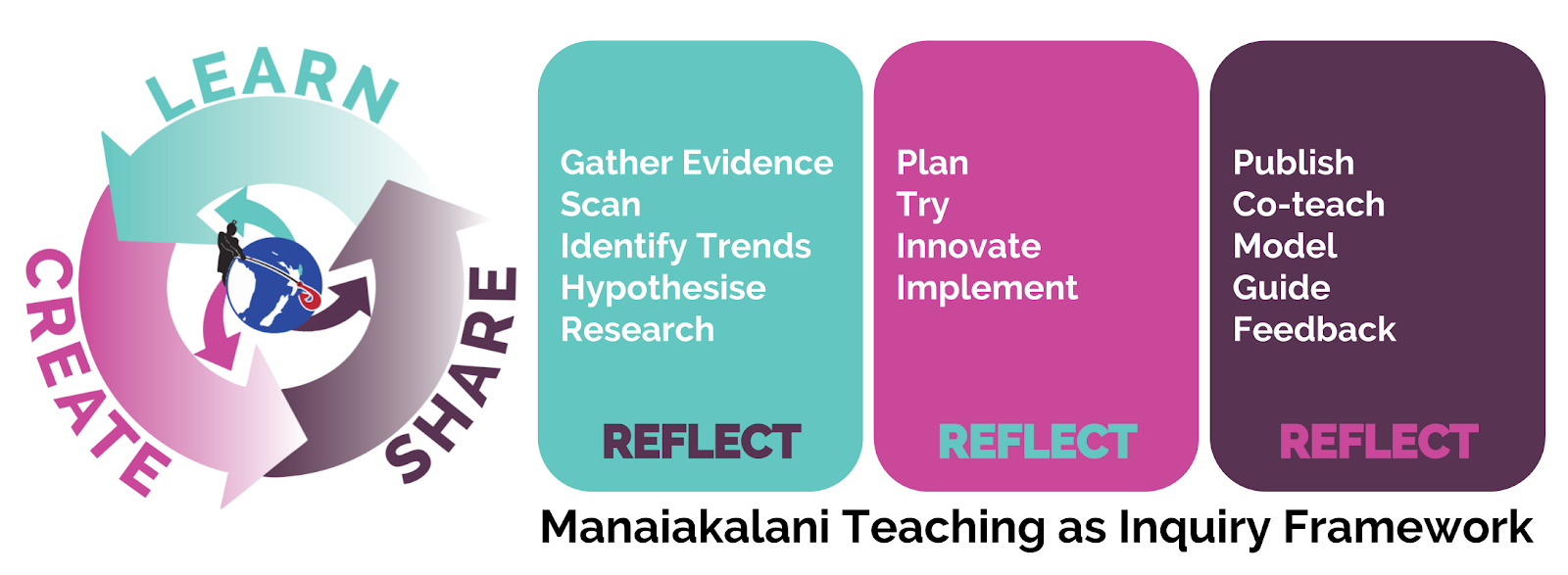
This term my inquiry will be based upon this strand of the COL Achievement Challenge
Lift the achievement in Reading for all students, with a particular focus on boys and Māori students (both genders) years 1-13
Very clear messages were received in our most recent researchers report. We need to provide more opportunities for our students to simply read - that's right independently read. While learning experiences via activities and creative task help to embed new learning - the action of reading for a decent chunk of time is valuable too!
Core learning area (our of 3) I am inquiring into
Reading
Writing
Maths
2. The lenses I intend to use: I have highlighted 2 as I will consider these two strands when supporting learners in this inquiry. I am tempted to highlight all!
Learning Behaviour/ Managing Self/ Setting of Norms
Cultural Responsiveness
Wellbeing/ Hauora
Language Acquisition
Here is my actual inquiry along with ideas and strategies I have so far.
Inquiry Focus
Inquiry Question
|
Reading mileage for boys will increase when boys are coached to and regularly checked in with reading mileage in and out of school
|
Possible Strategies
Hunches
What might work?
What can I try?
Ideas to investigate
|
Visit local libraries to engage with people and other resources that can support choice making around texts to read
Join online TC library, set a goal of one book a week for those who take chromebooks home. Issue for home those who do not take chromebook
Notice home to engage whanau around increasing reading mileage for boys, have a signed system daily
Have a set group that includes girl readers who have not shifted in year
|
Action Plan - See Journey on Blog
What steps am I going to take to change my practice?
|
Mid year Reflection
|
End year Reflection
|
Work in actual lesson time to visit our school library, surf through TC online library and actual time to READ during week. Do I need to consider furniture? Private areas for hard to focus students?
| To come | To come |
Thursday, 19 October 2017
Fractions to decimals: try this out!

This morning we had the privilege of observing Jo Know in action with some of our target group learners. These students are working at standard 6 in maths. This places just below the national standard in maths. Normally a very talkative group they were very quiet. A number of differences for these students
1. New teacher
2. Not in the normal class setting
3. 5 teachers watching their every step
You can see that it was a hard task for our students to relax at first and get into things. Once they did we learned so much! We could see a clear need to develop language and understanding around the focus of session. This was on converting fractions to decimals and vice versa.
Things we can try:
1. Give students the chance to try the following on their own bit of paper, reassure them it's not a matter or right and wrong. It's a matter of trying out any strategy they have.
2. Have students fold paper strip into halves, lable, the same again for quarters then eighths. This seemed straight forward to our students. However once asking to go back to identify now what 3/4 were AFTER paper was folded into eighths, this really threw them. The became indecisive. The prompt for decision making was made when made to use a scissors to quickly cut quarters with a countdown from 5. This action seemed to plant more understanding, some very nervous to decided where to cut!
Here's how it all started:
Teacher could ask the following (to check where students are at)Can you write 0.27One tenth?Three fifths?Five quarters?One tenth as a decimal?0.27 + 0.2 =?
We discovered a number of work ons and were led by Jo to the following the next steps when in class in next with target group:
** Next step going back to improper fractions
Use double number and more line for this. 3/2….the 3 is the ‘COUNT’ of how many halfs.
Lines would be:
- Whole number line
- ½ line
- ¼ line
Materials, push the imaging
Where they can’t work things out...go back to materials then back to imaging
Below is an example of a number line to develop understanding of equivalent fractions and to work with in use of improper fractions.

Friday, 1 September 2017
Data analysis in action - data to empower learners!

Process:
We carried out the process as explained in previous posts. Sitting test by going through IKAN twice, on own chromebook and earphones and then our discussion around our new set of results.
Points of difference:
1. Entering data together:
This time I had the data on the big screen with the group. I added this months results next to data collected earlier in year in front of the whole group. Each student shared which stage they were at for the various categories:
a. Number sequence and order
b. Fractions
c. Place Value
d. Basic Facts

The adding of colour helped students see more clearly how to track our data as learners and the teacher.
3. Setting the next steps for self:
From this data analysis students posted on a doc - as shown below of what their problem areas were and how they planned to tackle the learning needed. You can see some understand the purpose of this workbook others - well I'll need to coach them. They were directed to say 'How' they were going specifically try to improve OR whether they needed help from me. They attempted this exercise with the answer sheet in hand to see if they could comprehend further their path of error.

We plan to share our own reflective posts soon. Watch this space!
Friday, 11 August 2017
COL - my process so far
Let's walk it through:
1. Identify the challenge: acceleration of maths in year 7 - 10
2. HOW? Empower students by showing them their data
(Lenva & Jo)
3. Process:
a. Identify areas of success / difficulty
b. Identify the WHY it was difficult
c. Learn how to work through this - solve it!
4. Capture evidence of HOW to solve the problem
5. Share providing evidence AND teach the next student!
Below is an example of student carrying out numbers 6 and 7. Go here to see more from Hosea.
This week we have been learning to use 'screencastify'. This was to explore the use of 'Screencastify' to explain how I/we problem solve.
Can you see how I worked this problem out? Give me feedback if you think there's something else I could have added in my speech or screen capture.
Thursday, 3 August 2017
Target group update - data from end of term 2
We've had a series of team meetings this term where we've had the chance to share our data in maths. Alongside this our 'hunches' as to why behind the results. As a team we agreed that in our efforts to teach basic fundamentals in addition, subtraction, multiplication and division we didn't branch enough into the 'ratio and proportions' area. This meant our gloss testing showed a specific weakness in the solving of problems relating to fractions that sits in ratio and proportions.
Also - linking back to previous posts, the only going development needed in students being able to interpret word problems and be 'explain' ready when they do solve them!
Below I have data of my target students as of the end of term 2.
Green movement up - still not accelerated however. Yellow no movement and red - slipped back. This is based on gloss testing.
Also - linking back to previous posts, the only going development needed in students being able to interpret word problems and be 'explain' ready when they do solve them!
Below I have data of my target students as of the end of term 2.
Green movement up - still not accelerated however. Yellow no movement and red - slipped back. This is based on gloss testing.
Thursday, 1 June 2017
I can understand IKAN's
Update! In my most recent post I shared my:
Next steps for my inquiry: CREATE rubric and templates that support the following:
1. Carry out the 'SECOND' step as outlined in Jo's presentation
2. Plot results out of Spidergraph
3. Implement activities that prompt reflection on data
4. Decide WITH student what our next steps are in learning in the number strand
5. Implement support this choice in follow up activities and home learning
I have completed step 1 where my all my students were given the opportunity to sit the IKAN differently to how I have administered it. Most steps being those that Jo in our staff PD outlined. I have also completed step 4, students have published this on their blogs.
Process:


Next steps for my inquiry: CREATE rubric and templates that support the following:
1. Carry out the 'SECOND' step as outlined in Jo's presentation
2. Plot results out of Spidergraph
3. Implement activities that prompt reflection on data
4. Decide WITH student what our next steps are in learning in the number strand
5. Implement support this choice in follow up activities and home learning
I have completed step 1 where my all my students were given the opportunity to sit the IKAN differently to how I have administered it. Most steps being those that Jo in our staff PD outlined. I have also completed step 4, students have published this on their blogs.
Process:

- Students sat in their maths groups
- All with own chromebook and earphones
- Went through the IKAN test twice over
- Marked own test with teacher and group
- Circling those answers that were 'silly mistakes'. This meaning mistakes that were made in the haste of test setting. They could see what they did wrong and could prove themselves by answering a similar problem.
- Scoring the stages and various domains
- Blog post results and their own reflections that explained this different process and how they felt they performed using this new process

Students have made improvements overall. Place value has not shifted as much as I had hoped for. It has improved for approximately half of my class - the other half achieving stage 4 at the highest which still means no progress for a some students. Target group as displayed: 6 same level, 4 shifted upwards.
Identify the problem: This statement stumps majority of my class: 'How many tens are in all of the number 782? Answer 78 or 78.2. Students answer '8'. I can see that my lack in variety of questioning and activities of 'All of the number'. Time to create a task that will help embed this!! Look below for a draft of this.


The shift in attitude and 'can do' attitude has increased positively in students feeling more ownership over their learning, conversations with each other about how they made the mistake through to how to correct have been evident when marking in our small groups.
Tuesday, 30 May 2017
Creativity Embeds Learning
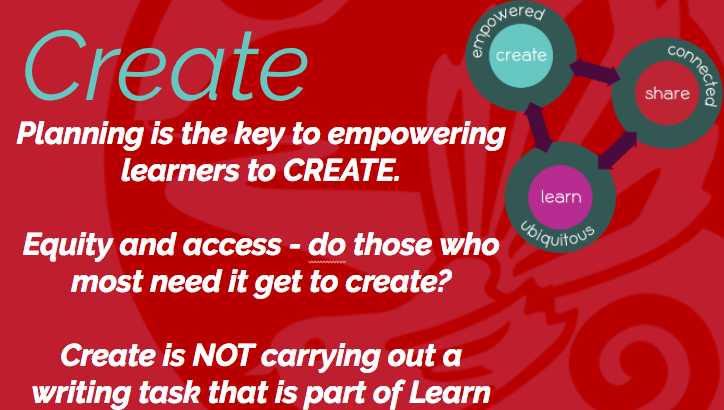
Dorothy Burt led us through our staff meeting Monday May 29th. I was privileged to be part of this presentation along with other colleagues who have been using 'Creativity to embed Learning' over some years now. Sight, sound and motion were intentionally used to help students to have depth to their learning. Learning that would stick and stay! Please look through the below presentation as it covers a range of practices and beliefs we've carried out here at PES. They work! Thank you Dorothy for another inspiring session. Many good reminders of things we need to maintain and those we need to improve.
On a personal and professional note there are some basics that classroom teachers need to put in place. Basic structures to maintain so students have equitable access to tools that enhance and support their creativity.
1. A roster that works in rotations within class hours that has every child have access to the devices where animation, paint programs and iMovie can be accessed
2. A clear task and rubric to guide the students creation
3. A checkpoint weekly to show progress, give praise and prompts
4. An absolute doing away with the 'Creative' devices - (Apple flatscreens in our place) being used as a reward. They are NOT - they are part of the everyday learning activities.
5. SHARE: a showcasing of creative work on media such as PENN (School TV news network), class and individual blog, team/class viewing.
6. Feedback: Give students the chance to give feedback and reflect
Part of my teaching practice finds me role playing, singing, moving and rhyming to help my learners. This has meant my students have had the chance to reflect this in movies we've made to share our learning. It's in these creative moments that I have witnessed first hand the embedding of their learning. Embedding that runs deeper and wider where creativity is encouraged and expected. Engagement high.
Monday, 15 May 2017
Using assessment data for 'Staff' and 'Students'

You may recall that I have been using the IKANS as a starting point for my data sharing with students.
I carried my action plan to highlight the strongest and weakest strand from the IKANS with my target students. A common complaint from us all was 'too fast!'. Jo shed light on an extended approach to using the IKANS - some of which I'm happy to say I've tried too!
In the above image you will note that FIRST you mark the IKAN, SECOND you show the students the answers. Allowing them to identify what they think were 'silly mistakes' for themselves. Students are then allowed to complete these questions and have them marked as correct.
This SECOND part I only carried out partially in showing the students the 'knowledge' they needed to be correct rather than letting them first scan to see what they could get right. Also note here - we are actually extending the test time - further than the fast screen flashes they experience in test time.
Formative assessment: PAT, IKANS and GLOSS. How do our students see these results? Often one piece at a time. A time I bring them together to date is when I am trying to make an OTJ for upcoming reporting season - mid year summary to prompt my next steps. Jo suggests to use a 'Spidergraph' (slide 14 in presentation below) to show both GloSS and IKAN. This in itself will be informative for students and surely motivate them to keep on with their learning sessions. Empowering students by using their own data.
Next steps for my inquiry: CREATE rubric and templates that support the following:
1. Carry out the 'SECOND' step as outlined in Jo's presentation
2. Plot results out of Spidergraph
3. Implement activities that prompt reflection on data
4. Decide WITH student what our next steps are in learning in the number strand
5. Implement support this choice in follow up activities and home learning
Thursday, 2 March 2017
Empower learners - show them the data!
My Inquiry this year as a CoL teacher is to use data to empower learning and teaching in maths.
What does this looks and sound like? Students receiving explicit teaching and guidance through their own data. Student empowered to interpret from data what their strengths and weaknesses are. Collaboration of peers and teacher to map out steps to accelerate their individual and group learning in maths.
Target Group - Priority Learners?
7 children - majority are sitting below the national norm. 2 from 2016 data show to be at. However small group conferencing and IKAN test it seems that they are sitting below. The absence in results for IKAN, for 2 due to poor attendance and the other an incorrect filling out of answers. I hope to test them this week to add their first round of data for 2017.
| Ethnicity | Year | OTJ 16 | Add/Sub | Mult/Div | Fr/Pr/Ra | Overall | NS | Fr | PV | BF | |
| Boy | Maori | 7 | At | 6 | 6 | E6 | 6 | ||||
| Girl | Tongan | 7 | At | 6 | E7 | 5 | 6 | 5 | 4 | 4 | 5 |
| Girl | Samoan | 7 | Below | E6 | E6 | E6 | E6 | 5 | 5 | 4 | E7 |
| Boy | Samoan | 7 | Below | 6 | 6 | E6 | E6 | ||||
| Girl | Maori | 7 | Below | 6 | 6 | E6 | E6 | 4 | 5 | 4 | 6 |
| Boy | Samoan | 7 | Below | E6 | 6 | E6 | E6 | ||||
| Boy | Cook Island | 8 | 6 | 6 | E6 | 6 | 6 | E6 | 5 | 4 |
Hypothesise?
Through empowering students to analyse and understand their own personal and group data, the students will accelerate their achievement and move into the 'At' and/or 'Above' in the number strand. (Gloss, PAT and IKAN assessments)
 |
| Slide from Lenva Shearing presentation to Manaiakalani School Leaders PLG |
Action plan to date
On completion of our most recent IKAN and PAT maths assessments students have and will be
1. analysing their personal data (what do the lines, numbers and dots mean?)
2. can explain their strengths and weaknesses (dialogic and text/symbols in blog post)
3. learner access any time to individual sets of data to help set learning goal. Goal is specific for target strand, determined by analysis in step 1.
Lenva presented to the School Leaders of Manaiakalani on 'Using student data to empower learners'. I plan to use this also as a title for my inquiry. Lenva's presentation was an excellent reminder having just completed testing cluster wide.
I will be using resources from this page on the Manaiakalani site to support teachers at PES to carry out the same with their learners. Also creating DLO that are rewindable for teachers and students.
**In addition to supporting learning in maths, as a Spark-MIT I plan to investigate how to better support home learning. Home learning being focused on the strand of number in maths. It'll be interesting to see the change this could bring about too!
I will be using resources from this page on the Manaiakalani site to support teachers at PES to carry out the same with their learners. Also creating DLO that are rewindable for teachers and students.
**In addition to supporting learning in maths, as a Spark-MIT I plan to investigate how to better support home learning. Home learning being focused on the strand of number in maths. It'll be interesting to see the change this could bring about too!
Saturday, 31 December 2016
2016 the year of 'So'o Tau'au' - To join shoulders
So'o Tau'au, 2016 sign off from SchoolTV on Vimeo.
2016 has been everything BUT normal! We had changes to the timetable weekly, family, new baby :) teacher's on leave and leaving, Papa's and a Mama passing - and in all this our kids stayed amazing! Stayed normal! Why??
We knew how and why - to 'So'o Tau'au'.
So'o tau'au is a Samoan saying that you typically hear in times of challenge. Families and elders will visit those in a time of trial to offer support, this statement will be made. Typically in our team we have sayings that help to embed our school wide korero. Rather than a growling - it's a prompt to re-focus using our korero - saying. This we carried through our learning spaces, in and out of the classroom - Te Reo, camps/field trips, tech@Tamaki College, testing, tuakana teina, visiting speakers, fundraisers, health talks and more!
Early in term 2 I shared this Samoan saying with our team during one of our morning karakia times. It became something we used year long along with all other korero. With all the changes that were expected and especially those that were not - this saying was one we held fast to.
Signing off for 2016 - I would like to wish all the students and teaching staff of Team 5 a fantastic festive season! Well done on another amazing year, you've all contributed to making this year one of positive difference.
Looking forward to what 2017 will bring - opportunity to again 'So'o Tau'au'.
Ia manuia lava le tausaga fou, faamanuia atu le Atua ia te outou uma.
Mrs Andrea Bakulich Tele'a
Simon says this about 'So'o Tau'au'
Subscribe to:
Posts (Atom)